Wednesday, 2 October 2019

Green(ish) dragon party

My eldest son was about to turn six and really wanted a Dragon party. We've always done parties at the house, and it somehow seemed even more important to carry on that tradition as we continue the process of settling into our new home, it also gave us more control over our plastic use and sustainable choices. Okay a party is a bit of an extravagance, but we did a range of things to try to be as green as possible.

How to Train Your Dragon really captured my son's imagination. We went to see the film back in February 2019 and since then we have been reading Cressida Cowell's books, which are quite different from the film. The party needed to reflect that rather than simply focus on the film version of Toothless.

I have to say I have been really impressed with the books, the way they handle bullying and being different. There was a great moment when Hiccup suddenly discovers that rather than being rather useless at sword fighting, he's actually rather good - he was just using the wrong hand. Our son is left-handed and he was just going through a phase of wanting to be right handed like everyone else, this helped him to embrace his difference and feel more positive about it. There's also plenty of humour so the books are enjoyable for adults to read aloud, which is just as well as there are 12 of them and they have been our bedtime reading for rather a long time now.

The books also feature the Pirate training programme as well as the vikings and dragons, so we included that on the invitations, widening the scope for fancy dress as well as enabling us to reuse some decorations from a pirate party we'd held for our son's third birthday. For the invitations I drew a Seadragonus Giganticus Maximus from the books which we photocopied and stuck to folded card and we invited vikings, dragons and pirates to join us. Rather scarily our son had a huge list of invitees, which we limited rather meanly perhaps, but in the interests of our sanity, to 20.

When holding a party in the house I think it is important to have a few key activities. I admit I tend to go overboard with these sometimes, but I do love a bit of craft and something to get the kids running around - preferably outside, which as luck would have it was possible this year.

1. The cake

Why I ever got into the habit of making my son's cakes I'll never know as it's always a heap of work, but there is a great satisfaction in producing the finished product, plus I have much more control over the ingredients. A friend pointed me to a simple outline for a dinosaur/dragon cake made out of a standard round sponge cake cut up. Once I had the basic shape it was easier than you might think to turn it into a dragon, the fact that his skin could have textures a bonus as that hid lots of imperfections. This was loosely based on the Toothless character from he book (in which he is green and small rather than black as he is in the film).

I was able to use pretty much all organic ingredients, the flour and baking powder were both from the local refillery shop. Used local organic eggs and milk (in glass refillable bottles from a local farm) and pick and mix sweets in a paper bag to decorate.


2. Craft


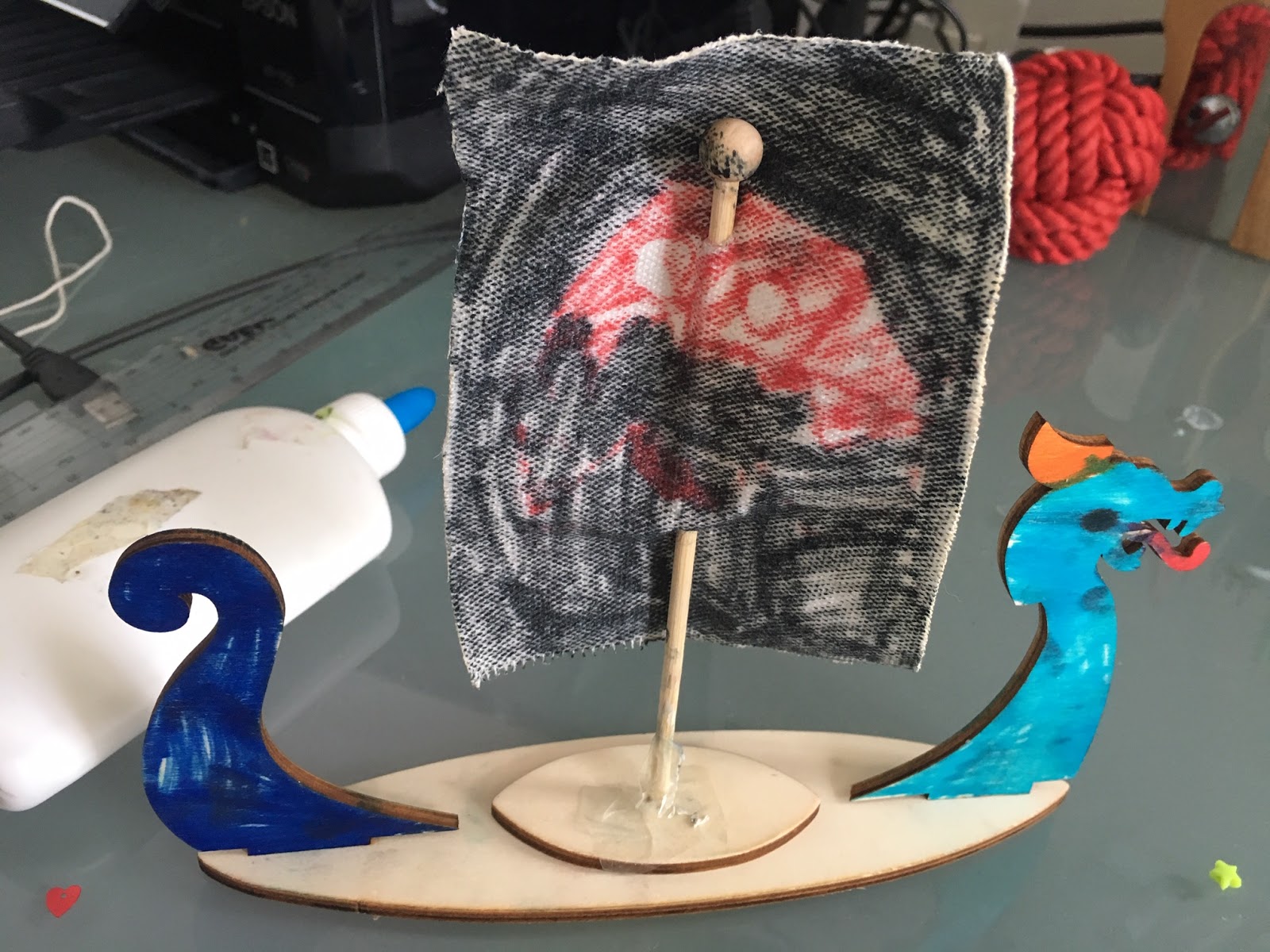
We had two activities; sword decorating and also little viking longship packs which they decorated and assembled. The swords we made out of cardboard boxes and painted white. The longships were more of an extravagance; kits from Baker Ross, but they pretty much made the party. I decided against paints as we simply had too many kids coming, so we used pens and some sequins we already had for jewel decoration. Paints would have been better, but would have needed a bit more space and definitely would have caused more mess.

3. Dragon hunt

How to have a treasure hunt that didn't break the bank and was sustainable option? Initially I thought I'd draw/paint them on card, but I really wanted to do something so the kids could take a dragon away with them in their party bags.

I didn't want to buy new, so I hit the charity shops, Banardos proved to be particularly good. It's amazing how many almost new soft toys you can easily pick up, and the different animals fitted in well with the books where you have dragons like the Gatordragons (basically alligator dragons) and the Hogfly (described as a pig in dragon form). I simply used some felt to make wings for various animals and hey presto we had a multitude of species from Ping dragons to Ugly Pug dragons - where they looked vaguely like a dragon breed from the book we gave them that name, otherwise we simply made the names up.

I drew a map of the house and garden with red Xs where the dragons were hiding, and an identification chart with tick boxes for them fill in. We hid the dragons around the garden, encouraging the children to team up to find them all. After the hunt, while the kids were eating, we gathered them in ready for the party bags.

4. Party bags

I got some lovely personalised seed packs from Ways to Say Thankyou, so no plastic and hopefully more flowers for the bees. Found some twig pencils that were used for the dragon hunt, little cutout wooden dragons and Divine paper-wrapped chocolates. I stamped dragons on plain paper bags and popped a dragon from the hunt inside each bag as well - these went down a storm, although people did have their favourites.

What I'd have liked to have done better


- Made my son's Hiccup costume rather than bought one.
- Made the sausage rolls rather than bought.
- Set out more space for the craft.
- Used old fabric and corks for the boats instead of buying kits.
- We had planned to do a couple of games like pass the parcel but ran out of time to prepare for them.

Thursday, 30 May 2019

Recycled curtains for the camper van

This project showed me how with a bit of creativity you can cut right down on your consumption and waste, while getting something new at the same time.


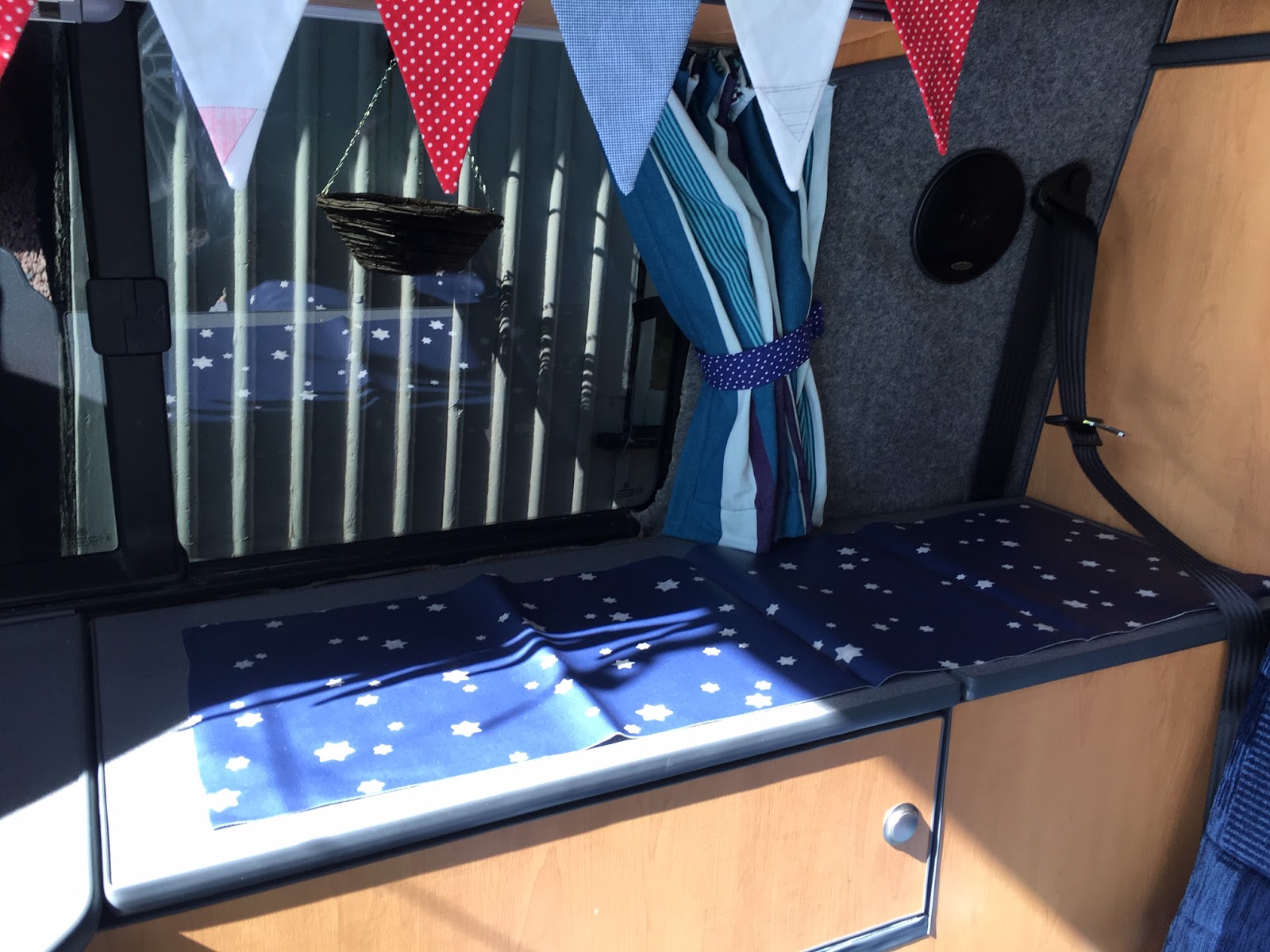
I had a lovely pair of bedroom curtains that had sadly got stained in the course of our house move last year, and didn’t fit any of our new rooms any case. Meanwhile our camper van had tired old curtains that cried out for a facelift. It was a perfect fit.

Using a seam ripper to unpick the seams on the stained curtains.

 As I took the old curtains down and double checked measurements and fitting to see if I could make any improvements ready to make the ‘new’ ones, my first thought was ‘I need some blackout lining and heading tape’ but that would delay me. Inspiration struck, so instead of getting into the car and going to get said supplies, I set to with some scissors and a seam ripper and removed the old tape and linings. Not only did it make the making-up a lot easier as I could use the old linings as a template, both the lining and heading tape were plastic-based so I saved money and landfill. Okay it took time to unpick the linings, but I even managed to do that while feeding my little one and it’s definitely the sort of task you can do while watching tv, plus I saved my time driving out to get the bits as well as saving my fuel, quite aside from the cost of the materials.

New curtains for free - I used blue fabric for the tie-backs in this part of the van. The bunting we were given five years ago when my son was born.


I used red for the tiebacks on the back window to tie in with the bunting.
I hope you agree the result is lovely (sorry I didn't do a 'before' pic but I'll just say Laura Ashley white, pink and yellow). The fabric used is actually called 'Swing' and is still available new from The Stripes Company.

The tie-backs were made with scraps of fabric I had in my sewing basket and the touches of red really help bring together the colour theme in the van. Didn’t cost a penny and meant I could feel happy that I’d reused rather than bought new, win win.

The new look gets the thumbs up - our seat cover doubles as a picnic mat.

Friday, 22 March 2019

More of the real thing

On my regular run round the fields near our house I saw two squirrels; one was real, and a red squirrel to boot. I stopped and took a moment's pleasure from a sight I wouldn't have seen when I was living back in England. The second squirrel caught my attention, and my thoughts for another reason. Instead of scampering away from me, it sat completely still, next to a badger and various other garden ornaments. It reminded me of the photograph below, of two plastic leaves I found washed up on a beach, next to the real thing. It reminded me of the artificial grass we saw in a few locations recently, and the weekend we spent shifting gravel and lifting plastic sheeting in the garden of our new (to us that is) house to reveal the life-lacking earth below. It resonated with my latest read; George Monbiot's 'Feral' and my general urge to 'de-plastic' and 'naturalise' our new house in order to make it feel more like home.

These plastic leaves found washed up on a beach sum up the problem of modern living for me, we need to change our habits.

There is no doubt that we humans love nature, but we have moved further and further away from it. All too often we surround ourselves with plastic imitations of the real thing: pictures on our walls; ornaments; decoration on pencil cases, bags, clothing... It's a disconnect that's bad for our own physical and mental health as well as for the health of our planet.

It is only very recently in man's evolution that we have shut ourselves away from nature, in boxes that shut out the natural elements and natural light. We evolved to be immersed in it, not distanced from it, our bodies are built to work in harmony with it, not to fight it  or eliminate it. It seems to me that we have progressively sought to shut nature down, order it, organise it, stamp our will upon it rather than try to harmonise ourselves with it. Perhaps that's why sailing is such a hugely therapeutic and positive activity for me. I feel more at one with nature, more in harmony, it feels like you are using nature's forces, but not forcing them or subduing them, not shutting them down, but embracing and exhilarating in them.

So here I sit, in a box that has too little of the natural world in its interior as well as its immediate surroundings, a garden that needs re-populating with life; rooms that need natural fabrics and materials... and I understand a bit better why that has been so important in my life, why I love camping, running in the rain, immersing myself in the sea, the forest, the mountains, the skies. And why I'm ready to do all I can to preserve it for future generations, and inspire my boys to understand how vital it is for our happiness and wellbeing as well as the small matter of our survival.

Monday, 11 March 2019

Baby steps

I'm a great believer in taking a bit by bit approach to things. Yes our planet may be in crisis, and I don't say that lightly, but life has taught me that is you try to do too much too quickly you will often fail. It's a bit like a crash diet, you can cut everything out and lose weight very fast, or take a more considered approach and let yourself have little bits of 'bad', lose weight a bit more slowly, but lose it in a maintainable way, a way that becomes a permanent change in lifestyle rather than a 'crash and burn' approach.

I think this is particularly important as my nature generally errs towards the 'I want to get everything done yesterday' mentality, so I need to slow myself down, and remind myself that baby steps will get you to your destination, and sometimes you can get there in much better shape, or spot important details along the way that help you to do things a better way.

So, yes we need to move towards a greener, more sustainable way of living, yes we need to clean up our planet and make sure we give our children a future, and yes we are running out of time and need to act NOW. But we can make big changes relatively quickly by taking baby steps, sharing the ideas we come across that work well in our lives and focusing on the positive of every little move make in cutting our consumption and moving towards sustainability.

A good example for me is reusable nappies; many people are put off by the thought of the work involved. But you could substitute just one disposable a day as a start and when that's working, try two... baby steps. Another is meat consumption - there are very few of us who would succeed in going vegan immediately, but if everyone ate less meat it would make a huge difference. So more realistic for most of us is to try reducing our meat consumption by one meal a month, then two, then maybe try a meat-free meal a week.

This is the thinking behind the series of features I am writing for YachtsandYachting.com right now... Take one step, then think what your next step might be. By taking baby steps each day, week, month then by the end of the year you will be greener.

Small steps will get us there, so don't be put off by the enormity of the task and take heart in every bit you do.

Just a few of our baby steps...


  1. Reusable nappies and wipes (currently 99% of the time)
  2. Homemade soup
  3. Loose leaf tea
  4. Homemade bread
  5. Soap substituted for hand and face wash, shampoo and shaving
  6. Food as much organic and local as possible
  7. Organic beef and lamb direct from local farm
  8. Organic milk direct from our local dairy using reusable glass bottles
  9. Fruit and veg as much as we can bought loose without using plastic bags
  10. Toilet roll and tissues bought in bulk without plastic wrapping
  11. Clothing - minimising purchases and trying to buy natural fibres
  12. Reusable water bottles, coffee cups and cutlery for out and about

A quote from Jane Goodall's film 'Mother Earth' sums it up really well I feel:‘I’m not alone in saying we have a window of time, a window to start changing the direction, but it depends on changing attitudes and if we could just get a critical mass of us who start to think about the consequences of the little choices we make each day, what we buy, what we wear, what we eat...’

The point is to keep chipping away at your plastic use, at your consumption and move gradually towards sustainable habits - every little counts, just as every biscuit you don't eat will help your weight loss.

Please don't be put off by the enormity of the task, together we CAN make a difference.


Thursday, 24 January 2019

Super useful soup

Soup. It's a delicious and healthy lunch and great to have in the fridge. BUT if you buy it you have all the extra packaging involved - especially with those gourmet type soups which mostly come in a Tetra Pak or a big plastic tub. Even if you recycle them, that's a huge amount of extra resource used to produce and then recycle that packaging. Make you own and you can eliminate that completely.

Souper useful


Soup has so many uses - especially in a family environment. If you're weaning it's perfect for the smallest person in your family, whether you're going the spoon puree route, or baby-led when it's ideal for your little ones to dip bread in. Quite aside from a quick lunch or tea, it can be easily used as a pasta sauce or a gravy or sauce to pep up a simple meal with lots of hidden veg.

Now time is always the biggest issue that has us reaching for a bought product, but I think I've found the perfect solution with soup. First I make it alongside a main meal. Usually on a Sunday afternoon or evening. It's much more efficient and easier to simply chop up a few more vegetables while making a main meal, I leave it to cook while we have our dinner, then add any suitable leftovers.

Make sure you've got some good containers in which to store your soup, and if you do a big batch on Sunday it will feed the family for the week. You can always freeze some too for pasta sauces etc.

Homemade soup ingredients


You can make soup with pretty much anything, just depends what you have in abundance. Keep an eye out for reduced veg in your local shop of supermarket and let that flavour your soup and use up any leftovers. Last December I made a very tasty 'Christmas dinner' soup which gave us an easy hearty meal on Boxing Day with a bunch of the leftovers from Christmas Day.

Squash
A squash will make a good soup and can be combined with other ingredients to make different soups to your taste. The great thing about a squash is it will keep for a good while so it's easy to ensure you generally have one in your food cupboard.

Onions
You can make soup without onions, but they are a pretty good staple to add flavour, whatever variety of soup you're making. Leeks can do a similar job, garlic, tomato puree and herbs are other great ways to add flavour as is celery. Pea soup is a really easy option -  frozen peas, onions and stock alone will give you a tasty meal.

Leftovers
Leftover gravy, small portions of pretty much any meal, any veg nearing the end of its life, broccoli stalks etc are great and have the added bonus of reducing your food waste.

This yummy soup was made with onion, squash, broccoli, carrot, celery and a bit of left over mashed potato. It kept us going for a week. I didn't have any chicken stock this week so I used a Kallo stock cube.

Stock
Every time we have a roast chicken I simmer the bones to make stock and pop it in the fridge ready for soup (or risotto) production. If I don't have any of my own stock, I opt for Kallo's organic low salt stock cubes (there's a lot of salt in regular stock cubes). A dash of wine, Worcestershire sauce or anything you fancy really - experiment with your own combinations, and try to take a note of what works so you can re-create a particularly successful combination. Happy souping!

Saturday, 31 December 2016

10 steps to a greener 2017

Sometimes the whole thought of the poor planet, what we have done and continue to do to it, seems overwhelming. If you look at the ever-expanding human population, destruction of the environment and the way we are running out of natural resources, it can seem as though we are on an inevitable path to self-destruction.

All rather depressing... so often we bury our heads in the sand and simply get on with life. However that's rather like being overweight and deciding to ignore it.

Why should being greener be your new Year's resolution? 


Just like a diet, small steps, over time, can add up to big results. Axing everything 'naughty but nice' from your diet overnight can cause dramatic short term results, but often is unsustainable and can lead to your weight yo-yoing, rather than stabilising at a more healthy level for the long term. It's also easy to think 'I've had one chocolate biscuit, so I might as well have more' when every little bit you don't eat will help.

With the environment it's exactly the same. You may think 'but I'm just one person, what difference will I make?' The answer is, potentially a huge difference.

To take a positive view, technology may one day give us some solutions to repair the damage we have already done, preserve our wonderful planet and ensure a long term future for generations to come. Every little bit we do to slow or stop the destruction will, in the worst case, delay disaster - and let's face it if the worst were to happen we'd certainly value that extra hour, day, month or year. Not only that, the more you opt for environmentally friendly alternatives, the more you encourage their availability and accessibility for others, not to mention inspiring more people to follow your lead. Every bit we all do to reduce waste and harm to our environment is helping us all.

And so this is a plea. When you make your New Year's Resolutions, make one of them to be a little bit greener, to think about your buying choices, your day to day actions and your life and try to do a little bit more to make your own impact on our wonderful home a little less harmful.

10 top tips for greener living


Here are a few handy ideas to reduce your impact on the environment. As my son loves to chant, 'reduce, reuse recycle' - this is a general good thought to have at the back of your mind, but there are some specific areas you can target and small life changes (some of them will also improve your life and your health as well).

Make considering the environment part of your everyday life. Try to take a moment to think about every item you buy or use. Do you really need it? Will it last? What is it made of, will it be easy to dispose of at the end of its life, is it re-usable, or recyclable?

1. Reduce your use of plastic bottles. Choose tap water over bottled water in restaurants, carry a reusable water bottle with you, and ensure that any bottles you do use go to be recycled. For more ideas to cut your plastic use, see these handy tips.

2. Switch to a Mooncup or similar sanitary product alternative. A Mooncup is a simple silicone rubber cup that collects your menstrual flow and is simply emptied into the toilet. No chemicals, no dryness, no irritation. This will save you money as well as a lot of hassle. Once you are used to using one, will make the time of the month much more pleasant as well - they are great for swimming, sports and even overnight. Imagine how much landfill, not to mention money, you would save if you never bought or threw away a tampon or sanitary towel ever again.

3. Buy secondhand. So much is readily available secondhand these days, thanks to the internet. Every time you buy a secondhand toy or book of item of clothing you are saving all the energy and materials involved in its manufacture. Our son's bike is a brilliant example; we bought an Isla bike from eBay. Well made the brand holds its value, our purchase looked like new and we will sell it on for pretty much the same figure we bought it for. Far better than buying a cheap bike new.

4. Avoid giving 'throw-away' gifts, especially anything plastic. If you don't know what to buy someone, buy something edible, or a subscription or donation to a charity related to one of their interests. For example, you could adopt an animal through the WWF.

5. Buy more organic, seasonal local food. Bear in mind where your food comes from. Look at the country of origin and choose items grown closer to home and which are in season. Plan your meals more carefully to reduce food waste, and compost food waste (many councils now offer this service). Eating less meat is also a good way to move to a lifestyle that has a lower impact on the environment, as well as helping with heathier eating.

6. Choose clothes carefully. Some fabrics can be a lot kinder on the environment than others. Not just in the processes involved in their manufacture, but also in what happens to them at the end of their life. Something that is pure cotton will biodegrade naturally, while a plastic-based fabric will end up in landfill. Buying more natural fabrics is a positive move, even better go for organic ones that avoid chemicals - better for you as well. Consider buying fewer, higher quality items. Read more about various fabrics and their environmental issues here.

7. Look at your household energy use. Not only can you try to reduce your energy usage, you can take steps to make your energy use greener. Simple steps include turning lights out, avoiding leaving electrical items on standby, turning the heating down, or moving to using a 'warm zone' in your house. You can switch to a 'green' energy supplier - this helps to send a message to the market that you would choose to get your energy from renewables, not only can you feel better about he energy you do use you are helping to grow the demand for greener energy.

8. Encourage breastfeeding. You knew I'd say that, right? For some it doesn't work out, and that's partly about a lack of support. If you're not in a position to feed yourself, you can help by supporting and normalising breastfeeding to help enable others to do it. Think how much energy is saved. No artificial alternatives that need to be manufactured, no sterilising or cleaning, no plastic bottles or teats, not to mention less medication. Read more about supporting breastfeeding and why we should all care about it and can all play a role in helping to promote it here.

Camping in the New Forest involved a short drive, but provided a wonderful escape. You can see our son's bike in the picture - purchased from eBay we will be able to sell it for pretty much the same price we bought it for.


9. Minimise your travel. Even if you cut one flight from your plans for next year you will make a difference. Try holidaying a bit closer to home, try using public transport. With our toddler, public transport is an adventure - taking the bus is enjoyable both for him, and the elderly who use it more regularly and take joy (well most of them do) in interacting with a lively toddler.

10. Switch to environmentally friendly cleaning products. Whether you switch all your products, or just some of them, this is a simply and positive move. As well as ingredients that are less harmful to the environment, these products are less harmful to you. Try a soap nut ball for washing, and try wearing your clothes a little longer before washing them.

There you have it, 10 ideas to get you started. There are plenty more. Most of all remember, every little helps, just like saying no to dessert, or that extra chocolate biscuit! This is for our children's futures and the generations that are to follow them. Let's do everything we can to protect and preserve our wonderful world.


Saturday, 3 December 2016

Children's books: seeing with new eyes

One of the most amazing things about children is that they help you to see things with fresh eyes. I have always loved books and after having my son I couldn’t wait to read to him. Before he could crawl I was reading aloud to him.

Okay in the early days it was the sound of my voice and the rhythm of the words that he enjoyed, not to mention giving the pages a quick chew or pulling the flaps off Where’s Spot, Dear Zoo and Rabbit’s Nap.

The classic books of my childhood 

My own childhood book memories go back to the age of three. Mouse Needs a House and Flippy the Frog, the former I learnt by heart, convincing myself that I could read before I was four. I have a vivid memory of my mother reading the opening few pages of Tolkien’s The Hobbit when I was five, which shows it's never too soon to share a good book. I remember battles at school to read the books I wanted, rather than those I was supposed to read. I remember being transfixed as my aunt read my cousin and I The Magic Faraway Tree, having to leave the room when The Castle of Adventure got too scary and wishing I was the girl in Ballet Shoes.

I also remember the magic of opening a John Menzies or WHSmith paper bag containing a holiday book. How a book token was the best prize I could win. How school fetes meant a chance to buy more. I read my way through school, the popular, the classics, from thriller to historic romance. I read everything by Enid Blyton, Noel Streatfield, Malcolm Saville, Roald Dahl, Mollie Hunter, Nina Bawden, Arthur Ransome, Paul Zindel, Judy Blume. I hoovered Jean Plaidy, Tolkien and Austen. I devoured Dickens, Hardy and Tolstoy.

My extensive reading grew my mind, widened my understanding of the world and honed my English skills. My reading got me through my exams, gave me my career and still gives me an escape today.

Now I’m enjoying a whole new world of books. Although many will talk about the demise of print, there’s one area where it is certainly thriving and that’s children’s books.

Surrounded by books, aged nine months. The children's picture book market is healthier than ever with a wealth of great books - pictured here Cyril the Snowboarding Squirrel, Slinky Malinki, Giraffes Can't Dance and What the Ladybird Heard.


My favourite children's picture books (for 1-3 year-olds) 

These are the books I have loved reading aloud most, not just the ones my son has enjoyed but the ones I have taken delight in too. I haven’t included the classics like Pooh, Paddington, Dr Zeuss, Thomas the Tank Engine (the original books, not the simplified modern ones, which lack the lovely rhythmic writing), the Mr Men books and Beatrix Potter. Those all deserve their place on any child’s bookshelf, and I’ve loved re-discovering them with my son. This is a list of some of the new books I've discovered, the books that weren’t there to inspire me when I was a child. 

Oi Frog 
Kes Gray 
This really made me giggle on the first read. Apparently frogs can only sit on logs, cats sit on mats, hares sit on chairs, mules sit on stools and gophers sit on sofas. The frog isn't impressed, then he makes the mistake of asking what dogs sit on!

Stick Man 
Julia Donaldson 
You can't go wrong with Julia Donaldson. I could have included a load more on this list, especially The Gruffalo, Room on the Broom and Tiddler. This is the story of stick man who lives in the family tree with his stick lady love and stick children three. He ends up far from home and goes on lots of adventures before he finds his way back in time for Christmas.

Jack and the Flum Flum Tree 
Julia Donaldson 
This my absolute favourite Julia Donaldoson, 'Don't get you knickers in a twist says Jack, let's have a look in the patchwork sack'. Brilliantly written and such fun as Jack goes on a voyage to the island of blowyernose to get a flum flum fruit to cure his granny of the moozles.

You Can’t take an Elephant on the Bus 
Patricia Cleveland-Peck 
As the title suggests, plenty of outlandish ideas about where animals could go - or rather where they couldn't go.

Giraffes Can’t Dance 
Giles Andreae 
I love this story about a giraffe called Gerald who eventually finds he can dance, but he just needs different music. Great illustrations and fun to read aloud.

The Day the Crayons Quit 
Drew Daywalt 
Very amusing concept, Duncan finds letters from his crayons; some are overworked, others not happy about the jobs they have to do, while yellow and orange have fallen out over which one is the colour of the sun. There's a great follow-up book too, The Day the Crayons Came Home.

We’re Going on a Bear Hunt 
Michael Rosen 
As well as being great fun to read aloud, this is a book you'll find yourself repeating lines from on muddy walks. Its repetitive refrain and poetic rhythm are a big hit from early on.

Aliens Love Underpants 
Claire Freedman
A very silly book about aliens stealing underpants. Great around potty training time, especially when you are planting the seed of wearing pants.

Hairy Maclary From Donaldson’s Dairy 
Lynley Dodd 
Bottomly Potts all covered in spots, Hercules Morse as big as a horse and Schnitzel von Krumm with a very low tum and just a few of the characters you'll meet. There are a number of books in the series which feature lovely rhythmic writing and stories to make you smile.

The Journey Home From Grandpa's 
Jemima Lumley 
Barefoot Books publish some beautifully illustrated stories, most come with an accompanying CD so you can learn to sing them too. This one involves of tractors, diggers, trains and cranes. Other favourites in the series include Driving My Tractor, Up in a Balloon and My Granny Went to Market.

There are oodles more. For more great children's picture books, see my list of top children's boating books.

Thursday, 24 November 2016

3 reasons why sailing is good for you

Since having my son my fitness and exercise regime has changed... out of all recognition. It's taken a while to find a new balance, but through it all I have come to appreciate even more keenly why sailing is such an important part of my life. My sailing has not (yet) returned to what it was, but a winter outing this weekend reminded me yet again how much I miss it and got me thinking about why.

The sea is a positive force

Before we even get into the activity of sailing, simply being beside and on the water helps to lift and revive me. Perhaps it's the fresh air, perhaps it's the sound of the water, perhaps it's the sun or the abundance of natural light that's reflected off the water. We all know how important Vitamin D is for our well-being.

I'm sure it's also in part due to the sea air. It's full of negative hydrogen ions,which improve our ability to absorb oxygen and can also help balance our serotonin levels (the so-called 'feelgood hormone'). Plus sea water is a good decongestant, with strong antihistamine effects - so it's even good for hay fever, sinus infections and colds.

Just the sea itself is a positive force.


Dinghy sailing is a thorough physical workout

Even on a purely physical level, dinghy sailing is far more of a workout than a simple run. The variety of twists, turns and different burst of activity offer a full and varied workout. They stretch me out in a way that only yoga comes close. It's only when you really sit and think about it that you realise just how much of the body a dinghy race will exercise.

There's rigging and launching the boat. Hoisting the sails. Hiking, leaning out, moving in and out and twisting to look ahead or behind, for marks, win or other boats. There are the hoists, tacks, gybes, trimming the sails. It uses pretty much every part of the body. No wonder sailors are among the fittest athletes at the Olympics.

Sailing is very physical using every part of the body, it's hardly surprising that sailors are among the fittest Olympic ahletes. Photo Richard Langdon/British Sailing Tea,.


Sailing is my meditation

Add in a third factor; not just a a workout for the body more importantly, sailing is a workout for the mind. Sailing is so all-consuming, that it really works as a complete shut-off from life. Why is that?

Well, your brain is asked to continually multi-tasking. 'What's the wind doing? Where are the other boats? What's the course? Is that more breeze over that or just a tide line? What is the tide doing? Am I ready for the hoist? Oh we've got some waves, ease that sheet, bear off a little, back in flat water, back on the wind again. Are we going to make the mark? Just, maybe... if we're lucky. There's that pesky 300, he's a bit close. Oooh, breeze is up, time to hike. How's our speed? I can see the mark, looks like there's not much tide on it, must be pretty much high tide. Ok, so on the run we need to watch out for it turning...'

Some of this is verbal communications, some internal thoughts, one after another, continually occupying your brain as you work physically to get the most out of the boat, and so it goes on, usually for the whole race. Get ashore and it's as though you've been meditating. The world is still there, but for a brief moment it disappeared completely.

There you have it, three reasons why sailing is so key to keeping us happy and healthy.


Sunday, 7 August 2016

How YOU can help improve breastfeeding rates and why you should care

Breastfeeding IS best for babies, but no mother should feel guilty if they choose an alternative. The key word, however, is ‘choose’. Lots of mothers have their choice taken away from them. There are so many benefits to breastfeeding… here is my personal tale and a few thoughts that might surprise some. I know it’s a long post, but please bear with me this is important for all of us, and it is something that everyone can help with. 

Nature cleverly provided us humans with the tools we needed to ensure our children survived to adulthood, even back in the days before modern medicine or vitamin tablets. A massive tool is breastmilk, and yet we underestimate its power, under-utilise it, and breastfeeding, let alone natural term breastfeeding is no longer the norm in the UK. If our breastfeeding rates were higher, then our NHS bill would be lower, families would benefit from avoiding the costs of formula, of bottles and sterilisation, and the environment would benefit too. The only loser would be the formula companies.

First: lose the guilt 

Of course we all try to do the best we can for our children, and for some people formula is the only option, or a conscious choice and I don't in any way judge those choices. (read my earlier post on parenting and doing what's right for YOU). There should be no blame or guilt attached to formula feeding.

However, I look on it in the same way as I do my son’s birth. I had a c-section, which I don’t believe was the best way for my son to enter the world for many reasons (both his health and my own, hospital costs and the environment) and I would not have chosen that path. However, I did all I could to achieve a natural birth. In hindsight I know what I would have done differently, but I didn’t have that benefit. I did my best. Another time I will do things a bit differently, research more, ignore some of the poor advice I was given, and have a better understanding of what I need to do to achieve the best for my child. I may still not manage it but I will try. I will also welcome education that perhaps enables others to deliver naturally where I did not manage to.

In the same way, I hope we can encourage every mother to try to feed, whether they previously struggled or not, but more importantly we need to give mothers the support they need to successfully breastfeed if they want to. Quite simply, in this country the support IS NOT THERE. Women are the ones who are made to feel guilty, but they shouldn’t, it is society that lets them down. If you consciously make a decision, there is no reason to feel guilty, if you do feel guilty it’s probably because you feel that you didn’t do enough – but the simple fact is, it was society that didn’t do enough.

Many women will say they didn’t have enough milk, but in the vast majority of cases they have been made to believe that when it is simply not true. A new mother’s faith in her natural ability to feed is constantly undermined, often by well meaning friends, family and medical professionals.

Asleep after a feed at just a week old.

My breastfeeding story 

I always knew I would breastfeed my baby. Before the birth I even had an amazingly realistic dream of my baby feeding. My mother had expressed regret at being pressurised to stop feeding me early, I was determined to learn from her. Everyone seemed so positive about breastfeeding. I thought my experience would be different.
Feeding in hospital at four days old.

I had a difficult birth, but my son was a natural at breastfeeding and initially it seemed easy (aside from the fact that I couldn’t even get myself out of bed or pick him up, and so relied on those around me to help). The midwife who delivered my son, a couple of other midwives I met along the way and partner were all amazing, but I lost faith in myself as all too many medical professionals around me planted seed after seed of doubt and were SO unsupportive when it mattered.

With the help of a few fabulous people I got through it, fought off the constant suggestions to feed him formula (which undermines breastfeeding for so many – more on that later), got my confidence back and settled into feeding my baby and being a mum. It wasn’t easy – feeding hurts, especially when they have a growth spurt and seem to want to feed almost constantly, I did all the nights, through two-hourly wake-ups, through mastitis, through constant self-doubt and worry that my son was putting on enough weight (he was absolutely fine, in retrospect I really shouldn’t have worried), the nerves about feeding in public. I reached the stage where it becomes easier, where you become thankful that you don’t need to pack anything apart from nappies, spare clothing and baby wipes where you go out, where you are glad that food and drink for your baby are always to hand.

How can we increase breastfeeding rates? 

So breastfeeding is a good thing for society, but how do we help more people to do it? It’s not as easy as to say mothers should breastfeed. That’s the problem, all the pressure goes on mums ‘this is what you should do’. And yet society’s support is not there, and the majority of people don’t really have the faith in it they should. Far too many medical professionals – doctors, dentists, health visitors even some midwives, give confusing, factually incorrect and advice that is detrimental for a successful mother-baby breastfeeding relationship. Far too many new mothers are made to doubt their natural ability to feed. Far too many families have lost the knowledge of breastfeeding, how it works and how to support it. Far too few people really understand its full benefits, from birth through to a year and beyond that.

It is food, medicine and comfort all in one, is there whenever it is needed and requires no preparation. It is amazing. It’s not the easy option in today’s society, and I can tell you that breastfeeding a toddler is generally not very pleasant, but it is right, it is the best thing I can do for my child and I simply wish that we work together to ensure that EVERY mother gets a fair chance to breastfeed if they wish to and are fully supported to do so. Education and normalisation of breastfeeding are key to this.

Here are just a few reasons why it is so important.

• Childhood cancer rates are higher in formula fed children.
• Sudden Infant Death Syndrome (SIDS) is higher in formula fed children.
• Formula fed babies are more likely to develop allergies.
• Cancer risks are higher for mothers who don’t breastfeed.
• Breastmilk helps a child to fight off infections while their immune system is still maturing = fewer hospital visits, lower use of antibiotics.
• Breastfeeding provides comfort and security.
• Breastfeeding helps most mothers lose their baby weight.
• Mothers who breastfeed are less likely to suffer Post Natal Depression.
• Breastmilk is individually tailored to each child, each feed is different depending on their needs and it changes as they grow.
• Breastmilk is highly nutritious and easily digestible, putting less pressure on a baby’s digestive system than artificial alternatives.
• Breastmilk includes important bacteria that help a baby to develop a healthy gut.
• Breastfeeding is far better for the environment than the alternatives.

A few breastfeeding facts 

• It is normal for babies to wake frequently, feed frequently, to want to be held close.
• Not every baby grows at the same rate, babies born to mothers on a drip will probably have their birth weight affected by this and may appear to lose more weight.
• Growth rate charts are based on an average of ALL babies – so they are distorted by formula fed babies who tend to be heavier.
• The more she feeds, the more milk a breastfeeding mother will produce. Simple.
• Every time you give a formula instead of breast milk you will reduce supply. Not just that, as formula is more difficult to digest, you have to feed larger volumes, so a baby’s stomach is stretched. • Pumping can help keep supply up but a baby is generally a lot more efficient and effective at removing milk - how much a mother can pump does not reflect her supply.
• The first six weeks in particular is tough as a mother’s body is adapting to milk production, but this normal and it is also the most vital time and when support is needed most. Once through this stage things will get easier. There may be issues, like a tongue tie, as one example, affecting feeding, but these need to be addressed rather than formula being offered as the easy solution.

My initial breastfeeding goals were a month, three months and then I hoped to manage the magic, recommended six months of exclusive breastfeeding before weaning onto solids. That all went well, my son loved solid food and I imagined that when he reached one and could have cow’s milk, I’d stop breastfeeding completely. However, my son had other ideas. He knew what was best for him, and while cow's milk became part of his diet, he still wanted my milk too. Even though there have been times when I have hated it, when I have personally been desperate to stop, having read all the scientific research and combining it with my own common sense, I couldn’t refuse him.

The power of breastmilk

My son is now over two and a half and some days he will go 24 hours without a feed, while others he asks for it all day long. Just a couple of months ago he suddenly asked lots during the day. I said no, he’d have to wait until bed time. That night he became very snuffly, he had a cold. I felt bad. More recently, a similar thing happened, although this time it was a stomach upset he was fighting. It’s a pattern that has repeated itself so many times. Ishould know by now - he knows better than I do. His body was trying to fight off the infection and needed the help of my milk to do it. Instinct told him that he needed ‘mummy mootz’ right then, just like I crave orange juice when I have to beginnings of a cold. By two a child’s immune system is only 60% of an adult’s. If he does become ill, my milk is not just a medicine providing antibodies to help fix him, it also provides so many of the essential nutrients he needs in an easily digestible form. It’s like taking a high energy health drink that’s also kind on the digestive system.

When will I stop? I don’t know. I’ve certainly been ready to since my son was 18 months old, but he’s not. At some point I will feel it is time for my needs to come first, hopefully he chooses to stop before I have to force him. The natural weaning age for human babies is generally between two and seven. While I can resist things that are bad for him - I don’t mind upsetting him by limiting sugar, salt, television, making him brush his teeth and saying no to things that are unsafe - I can’t deny him something that I know is both incredibly good for him and completely natural.

#normalisebreastfeeding #breastisbest #worldbreastfeedingweek

Saturday, 11 January 2014

There is no ‘right way', just 'the right way for you'

As a newly qualified teacher, all too many years ago now, I remember facing the reality of teaching a bottom set year 11 class the joys of Shakespeare. I tried sitting, then standing behind my desk, I tried standing in front of it. Then one day, when I was feeling buoyed by the delightfully enthusiastic year sevens that had preceded them, I perched my backside on the desk and felt myself relax.

"Never EVER sit on the desk," I’d been told on numerous occasions… but on the desk I felt comfortable, I felt more at ease, I felt more ME. That meant I came across much more confidently, and my authority was enhanced, not damaged, by the more relaxed approach. From that day on I took delight in sitting on the desk, sometimes even cross-legged, learning that the best classes I ever gave were when I let my instincts and enthusiasm take over.

"Don’t smile for the first term," they also said. But it was when I smiled, joked and laughed that I was much more successful in my classroom management – a stern, harsh, strict style simply didn’t sit well with my personality. There were many similar things I discovered over the following years of my career as a writer and editor about managing people, of any age. I had to find my own style... methods that worked for me as an individual... and I also learned that those approaches also had to vary depending on the individual employee, circumstance and dynamics involved. There is no right way, just the way that works for you.

Finding the right path as a parent

As a new parent I find I need to remind myself of this. Recently, I enjoyed reading Ava Neya's amusing article I Learnt by Going Where I Have to Go, which highlights the endless and conflicting advice that seems to come from every corner. She’s writing about sleep, but the same applies to feeding, weaning… in fact, as far as I can see, pretty much every aspect of child rearing.

“Naps should only be taken in the bed, never in a swing, carseat, stroller, or when worn. Letting them sleep in the carseat or swing will damage their skulls. If your baby has trouble falling asleep in the bed, put them in a swing, carseat, stroller, or wear them,” she writes.

“Put the baby in a nursery, bed in your room, in your bed. Co-sleeping is the best way to get sleep, except that it can kill your baby, so never, ever do it.” I’m smiling… the stream of advice is all to familiar: “Don’t let your baby sleep too long, except when they’ve been napping too much, then you should wake them. Never wake a sleeping baby…"

As a new parent you tend to feel you don’t know what you’re talking about. Everyone else knows better than you – and yet they all say different things. The reality is that every baby is an individual, as is every parent. While there are lots of tips, methods and ideas that are worth trying, you have to find your own way to the solutions that work for YOU. Information is very useful, but there is no RIGHT way that fits all, there’s just the way that seems to work best for you and your baby as individuals. And that doesn’t stay the same as the realities of life, and a constantly changing and growing child make every week and, at some stages, every night, a different one.

I think I’ll just keep on trying to take it all with a pinch of salt, chill out as much as I can and remember Ava’s concluding line: “Don’t worry. Stress causes your baby stress and a stressed baby won’t sleep.” A stressed parent won't sleep either!

I don't claim that I'm doing things right... but as any new family does, we're simply feeling our way through, doing our best to try to find the right way for us.

Thursday, 8 November 2012

Struggling for new ideas? Get out of the office!

I had an eureka moment a few weeks ago. I realised just why working with the teams I do, in the way I do is so rich, so creative and so productive. I realised why I never seem to run out of fresh ideas. I realised why my enthusiasm and my drive can seem endless. I realised what satisfies me and how I have made a success of my life... and it's all down to the the magic that happens when ideas have sex! 

It was a video talk by Matt Ridley (When Ideas Have Sex) that, for me, clarified just why I have found such inspiration in looking outside whatever organisation I'm in. Why I've sought to find out more; see new things, meet new people, hear new experiences. Why I never feel I know enough, and constantly feel like I can learn from others. And why that has enabled me to achieve more.

It's how I have always run my professional life and how I run my business.

Using the best people
Some five years ago I moved from a salaried position, to working as a sub-contractor. It was a daunting prospect, but once I started thinking in a new way, the possibilities opened up. First I could tailor people's jobs far better than I'd been able to before. I wasn't stuck with a certain team for everything I wanted to do. I could use the best people for the things they were best suited to. If a member of my team wasn't so good at one task that needed doing, well then I could use someone else, instead of having to use them simply because they were on the payroll.

Un-used talent
There was another bonus: I could tap into talent that was being unused, parents who were at home looking after children. I didn't mind when they did their hours, it gave me access to some very skilled people who were delighted to have a position that they could work around their childcare needs. I got highly experienced and dedicated people that proved a real asset. My team was stronger. No longer was I stuck with appointing someone willing to work in a particular location, I could simply find the best people, regardless of where they lived.

And so the team was built... where you might have four full time staff, I had seven, all working part time. I had a wider team of freelance writers and photographers as well - again, rather than filling the hours of a core team with things that didn't suit their skills, I would use them for the bits that suited them.

The input of new ideas
As much as we worked as a team, we all worked on other projects, and this proved to be an added bonus, the true value of which took me a few years to appreciate.

Because we were all working with other clients, on other publications, other websites, or writing or taking photographs in other areas, we were all learning. Coming across new systems, different ways of organising things. Our experience working on the magazine together fed into our approach with those new projects, but in turn the new experiences fed fresh ideas back. New systems for communicating, for running meetings, for handling content. Ideas, ideas, ideas. We were in different parts of the country, working on other projects with different teams, and when we came back together, these experiences went into the pot, helping us to improve on what we were doing.

We were stronger for the time spent apart, fresher, and whenever we met up again, our new ideas met as well, joined together, interacted with one another, and produced new ideas of their own, resulting in improvements in the way we were doing things as well as injecting a fresh shot of inspiration.

It's when ideas meet in this way that your work, your business, your life moves forwards. Shut yourself away in your office, with the same people, the same processes, the same way of doing things and you'll stand still... get out there, harness the diverse ideas and input of others, and your business will move forwards, faster. You can become more efficient and better at what you do. I've valued the input of others for years... now I have a better understanding of just why it's so valuable.


Sunday, 23 September 2012

The attraction of solo racing

I interviewed Mike Golding recently for a feature, and as we chatted aboard Gamesa... his steed for the 2012-13 Vendee Globe Race, his passion for sailing, and solo ocean racing in particular was evident. He spoke with the enthusiasm of a child as his eyes gleamed at the prospect of 90 days of racing in some of the world's most remote oceans... while I couldn't think of anything worse! I like my home comforts; after a day's racing I like good, freshly cooked food, plenty of chit-chat with friends and a warm bed... not sleep grabbed in 15-minute catnaps between jumping up to get cold and wet changing a sail in the middle of the night, ready meals and the sat phone for company.

But then there was a gleam of understanding. I love my sailing. I love the way you can completely escape from the world in a way not other sport can seem to manage.

Gamesa powering upwind - photo Mark Turner/Gamesa
‘I think of it as three-dimensional chess,’ said Mike. ‘You can win on the top board or the middle board or the bottom board or you can win diagonally. It’s a crazy, crazy game and it involves so much. When you get immersed in something like that you’re living it so you feel a windshift you instantly are processing what that means for you in relation to the rest of the fleet… you’re fully immersed.’

For most of us that immersion is for a few hours, not 90 days, but that complete escape is invaluable. Why does sailing achieve this? I think it's due to its demanding, complex and varied nature. It’s such an escape because of its many different layers, including tactics, wind, waves, tide, other boats, the course, sail trim, boat trim... not to mention manoeuvres. You are totally occupied physically and mentally. There is no space for the worries of the world. Imagine doing that for 90 days… okay maybe I can see the attraction!

Wednesday, 15 August 2012

Should sailing be an Olympic sport?

As the debate gathered momentum amongst a group of colleagues, I felt the tigger within rise to fight a cause I feel sooo passionately about.

Sailing. The sport I love so much is, in my view, one of the best things that can happen to anyone. If you have seen, as I have its power to transform lives, enable youngsters to realise their potential, and give happiness, peace and delight to so many then it's hard not to care about the sport's visibility, and let's face it, events like the Olympics give it the sort of visibility it needs - not the high end glossy big boat side of sailing, but the grassroots, £100-Laser-dinghy sport that is perfect for all the family.

The Olympics inspires so many youngsters to give sports a try - and if you have seen what sailing does to turn around some of our wayward youth, then you would wish that everyone could get the chance to try it. It's NOT EXPENSIVE and there are plenty of opportunities for youngsters to get involved - if they can be inspired to give it a go.

My dad taught himself to sail at the age of 30 when we moved to the coast. He bought a converted 'Optimist' for peanuts and my brother and I shared it. I say 'Optimist' as it was a home built version with no buoyancy, a bowsprit and a jib! And no buoyancy... we learn to sail on that and our family dinghy - a wooden Dutch scow he also bought for less money than a bicycle (it was cheaper than a secondhand Mirror dinghy so that says a lot!).

I've seen sailing cure depression, ease grieving, help those battling illness, give deprived young people a sense of pride and control over their own lives... it is an amazing sport. In my view, if more people took part in it, the world would be a better place!


Friday, 13 July 2012

Train travel, doggie style: top tips for taking dogs on trains

'You're taking your dog? On a train?!' the incredulity the first time I told one of my friends I was taking Basil on a 600-odd mile journey by public transport did make me question my sanity slightly...

Basil sleeping on my half-packed bag before a trip!
Basil is a seven-year-old cocker spaniel. He has all the usual crazy cocker tendencies, and he is a rescue dog - so his obedience training was a bit late in life. He has more energy than the Duracell bunny, will eat anything he can get his paws on and gets a bit barky when anxious. Not, perhaps, the best 'model' or 'perfectly behaved'  candidate to try doggie train travel with.

I really didn't want to drive to Scotland... he can't fly, and yet I didn't want to leave him behind either. That said, I did think carefully about what I was doing, but decided it was worth a try.

The first time I took him was just before New Year. My boyfriend and I had booked a cottage near Dunoon - the plan was to do plenty of walking... It would be a real doggy heaven. The only problem was getting him there.

The timing of my trip meant it was mid-way through the Christmas break. It would be quiet. The biggest problem as far as I could see was my route took me through London. On the way home there seemed to be good connections to travel cross country, but on the outward journey it seemed that I needed to go via London. Figuring it would be quiet I sort of decided 'in for a penny...'

Dog traveling on underground
Basil on the underground
It was one of the best decisions I have ever made. Although it was a bit stressful - especially navigating the tube with bag and dog in tow - he was amazingly well behaved and people were sooo helpful. From fellow passengers to the ticket inspectors and tube staff. On the train, the soothing motion was similar to the car and he soon fell asleep. He needed some distraction when the doors kept opening and closing on the tube, but otherwise he was fine.

Since his trip to Glasgow, Basil has been to Inverness and Aberdeen on the train and we even travelled by bus from Inverness to Aberdeen when we missed a train. He loves it, so many new smells, people and places - he always sleeps particularly soundly after travelling, which is a bonus if you want a lie in the next morning! The shared experience helped us to bond even further and I'm much more confident about taking him to places. It has meant he's been able to enjoy some fabulous places around the UK and meet lots of people. It's definitely worth the effort!

Walking dog up hill near Dunoon
Basil and I up in the hills near Dunoon on New Year's Day - a fabulous walk which he couldn't have enjoyed if I hadn't taken the plunge and tried doggie train travel for myself!


Top tips for doggie train travel

Basil asleep while I work on a trip to Inverness
1. Book seats where you can - you can do this very easily if you buy your tickets online at the time of purchase. If you're not sure of your return time, most operators will let you book seats for your return even after you've bought your ticket - you'll have to ring up and it's a bit of a pain, but worth it. The best seats are window seats - avoid a table seat as your dog will spread out under the table and this can be awkward on busy trains unless those sharing your table are dog-friendly. If you have a dog people will often choose to sit elsewhere to give you a bit more room if there are spare seats.

2. Take a rug or blanket that you can put on the floor to encourage your dog to sleep on the floor- remember although it is free to take them, they aren't entitled to a seat and it's very useful if you can train your dog to sleep happily at your feet- it makes coach/ bus travel an option as well.

3. Try to exhaust your dog with a massive run or walk the morning of your journey - even if this means getting up even earlier - the bonus is he will sleep on the train and so can you!

4. Be aware of his need for comfort breaks. Amazingly Basil has never had any accidents on trains - peeing in a station concourse is probably the most embarrassing danger as you can't exactly pick it up!!! But he always seems to prefer the street so as soon as we get somewhere I get him out on to the street and walk with him until he does something in the toilet department. On the longer hitches I also took him out briefly when we stopped at a quieter station- although he generally preferred to wait.

5. Have plenty of poo bags in every pocket - remember even if he is good and doesn't do anything too embarrassing, you are juggling luggage as well - Basil chose one of the walkways between the tube trains once, very embarrassing and the faster you can react the minimal the embarrassment!

Basil with one of his favourite toys
6. Take plenty of treats and a water bowl - make sure you have food if there is the slightest danger you might be delayed beyond mealtime (our train to Inverness was two hours late and didn't arrive until 10pm!). A folding bowl is brilliant and if you have a bottle of water handy you can always ensure he gets a drink when he needs it. I usually take a rawhide bone and a couple of his toys as well, both for his final destination and for the journey.

7. Take care getting on and off trains - widths vary between train and platform and sometimes over-eagerness to get on or off can mean your pet misjudges the distance.

8. A flexi length lead is very useful giving you more options - I found setting it to the right length and the wedging it between the two seats was an ideal solution on the train.

9. Stay calm... if you are nervous, your dog will pick up on it. Remember there are lots of people around more than willing to help you out take advantage of their kindness at every opportunity to fit in your own toilet breaks or grab some food.

10. Enjoy! It's much more fun travelling with a dog, you'll meet many more people and find it strengthens your relationship with your pet.

Tuesday, 26 June 2012

Why paying on time makes good business sense

Goodwill is worth its weight in gold

My parents ran a small business - in fact they still do. Growing up with that made you very aware of the importance of goodwill in any business. If you look after someone, generally they will reward you with loyalty and when the chips are down, they will go out of their way to help you out when it's needed.

When you are working with long term suppliers or partners, looking after others when you can goes a long way. Keeping that 'goodwill bank' well in credit will enable you to run your business more effectively, more efficiently and deliver the highest quality of service because it means the people you have involved actually care about what they are doing and care about you, because you have shown, consistently, that you care about them.

If you pay someone late, you are saying you don't value them, or the service they have given you. If someone has done a good job, reward them by paying early and next time you will get as good a job, if not better. If you are known to be a consistent, timely payer, and you don't need to be chased to pay an invoice, most people will value and appreciate it. Then when you need to hit a deadline and they have two jobs on their desk, which one are they going to prioritise? If something needs a fast turnaround and they need to work late, or cancel a night out, they are far more likely to go out of their way for you if they feel like you have looked after them.

I have also found, time and time again, that economically this makes sense too. If you have a good client that treats you well, you are more likely to throw in some of the small extras you may have done along the way, or go out of your way to point out an error, or even a more efficient way of doing things. Wasted time and effort is in no-one's interest - efficiently run businesses are more successful and more profitable, which in the long run is better for everyone involved, be they a supplier of materials or labour. Suppliers and businesses can and do help one another where the relationships are strong, and all are stronger and more successful and secure as a result.

So, every chance you get, pay early. If you pay late, make sure you apologise and pay immediately. We are all human, we all forget a holiday, find a clash of deadlines or staff sickness means we perhaps miss paying a bill, but then it's about fixing it as soon as you can and if it's not the norm, people will be all the more understanding. If you have a cash flow issue, let people know their payment will be a bit late before the due date, and make an extra effort to pay the next bill early - letting them know you have done that to show you appreciate their understanding.

A little bit of goodwill goes a long, long way and you never know when you will need it.

Monday, 25 June 2012

Self doubt: the biggest fight

I hadn't realised that getting my black belt in karate would be such an emotional journey... 


Doing a kata competition as a green belt
I was so nervous I could barely get the words out... I finally responded as my name was called and held my breath. 'Shodan,' the examiner announced. One simple word that meant so much. It felt unreal. Shodan - 1st Dan Black Belt...

My journey had begun when I first started karate at university. After a 15-year break, I returned to training in earnest. I had a goal in my mind; black belt by 40. It was a tough, but not an unrealistic goal. At times I had felt on track, at others I thought I would never get there. One month I would feel I was really getting somewhere, then another I'd feel you have taken a giant step backwards. Looking back one of the biggest challenges was to get through those low points.

My first real glimmer of hope that my goal was reachable was 18 months earlier. I was paired up with someone going for a higher grade than me... suddenly I was being asked to do a freestyle fight. I landed a punch. One punch that gave me so much hope. Right on target, but with complete control to lightly touch my opponent's chin. It surprised me. Wow, I could actually do this! I stored that moment away and at numerous low points over the following 18 months I drew on that memory to give myself the boost I needed - it's something I've frequently used in the sport that remains my first love - sailing.

There was one more session before the big day. 'You're very calm,' commented one of the senior black belts. I was striving to be cool about it, but just how close my nerves were to the surface was evident when my movement in my kumite was commented on. It threw me, I felt I couldn't do it, felt I couldn't do what was being asked of me. But I battled with my self doubt, and remembered my Sensei's words from earlier in the week to just keep doing what I was doing.

My grading was set for June... At a black and brown belt course in Plymouth. I tried not to get too concerned about the grading itself... I had done the training, my instructor felt I was ready, and if I failed then, well, there was always the next course.

The day itself went by in a flash. I didn't hold back during the training session beforehand, having the faith that I was fit enough and prepared enough to give my all right through. By the end of the training session my gi was wet through - it was a brilliant but challenging session and I actually enjoyed it, taking the opportunity of letting the training push thoughts of the grading out of my mind.

I changed into a fresh gi and then my nerves started to build a bit. Breakfast seemed a long way away but I couldn't eat anything. I was very grateful for the bottles of energy drink I'd filled my bag with.It seemed like forever before we were called in for our grading... There were five of us, three up for their Nidan (Second Dan) and two of us for Shodan (First Dan). I was the only girl - which led to my first disaster. Assuming the guys had already gone in, I managed to walk in while the grading Senseis were getting changed! Red-faced I retreated quickly - but it didn't help my nerves!

The grading went by in a blur. I have no idea how I passed, I seemed to make so many mistakes but I just kept on going. Throughout I kept saying to myself, 'I want it!' When my hip delivered a jarring pain, when my calf cramped up, when I felt my body yelling exhaustion, I pushed it out of my mind and refused to listen.

Putting on my black belt for the first time
When it came to jiu ippon (a regimented one-on-one combat sequence) and I found myself gazing up at my seven foot opponent (I know, I know, he was probably only six foot), who was very good, but approaching it more with a competition style, rather that the intended aim of showing off his skill and mine. I almost let myself get psyched out by this, especially when he threw a mean kick at me. I remember thinking 'Oi! I didn't do that to you, I made my attacks very clear and made things easy for you. Now you're trying to make me look bad. I'm not having that! My next counter attack was more forceful, my shout louder. I felt my determination growing when it could have withered. I think that was the turning point.

To be honest I thought I'd already messed up, but told myself I had nothing to lose. That's what took me through to pass. I refused to let my mistakes bother me. Fought back against the nerves that had my hands shaking and had led to some silly mistakes. Fought against my self-doubt, any niggling thoughts that others were so much better than me and I wasn't worthy of the grade.

I walked back to the changing room and wanted to burst into tears. Part of me was convinced I'd failed, but I shouted back at that voice, 'Don't give up!' I had given everything. I hadn't delivered my best performance, but I had delivered the best I could on the day. I had no more to give. If it wasn't enough, well then I would be back to retake... I steeled myself for disappointment, but then came those magic words I'd waited so long to hear.

In the car on the way home, with my grading book freshly signed in the box labeled 'Shodan', I didn't feel elated, I just felt drained physically and emotionally. I had fought myself and won. Oscar Wild once said 'Be yourself, everyone else is taken.' I had needed those words to stand my ground. I was worth it!