Breastfeeding IS best for babies, but no mother should feel guilty if
they choose an alternative. The key word, however, is ‘choose’. Lots of mothers
have their choice taken away from them. There are so many benefits to
breastfeeding… here is my personal tale and a few thoughts that might surprise
some. I know it’s a long post, but please bear with me this is important for
all of us, and it is something that everyone can help with.
Nature cleverly provided us humans with the tools we needed
to ensure our children survived to adulthood, even back in the days before
modern medicine or vitamin tablets. A massive tool is breastmilk, and yet we
underestimate its power, under-utilise it, and breastfeeding, let alone natural
term breastfeeding is no longer the norm in the UK.
If our breastfeeding rates were higher, then our NHS bill
would be lower, families would benefit from avoiding the costs of formula, of
bottles and sterilisation, and the environment would benefit too. The only
loser would be the formula companies.
First: lose the guilt
Of course we all try to do the best we can for our children,
and for some people formula is the only option, or a conscious choice and I don't in any way judge those choices. (
read my earlier post on parenting and doing what's right for YOU). There
should be no blame or guilt attached to formula feeding.
However, I look on it in the same way as I
do my son’s birth. I had a c-section, which I don’t believe was the best way
for my son to enter the world for many reasons (both his health and my own,
hospital costs and the environment) and I would not have chosen that path. However, I did all I could to achieve a
natural birth. In hindsight I know what I would have done differently, but I
didn’t have that benefit. I did my best. Another time I will do things a bit
differently, research more, ignore some of the poor advice I was given, and have
a better understanding of what I need to do to achieve the best for my child. I
may still not manage it but I will try. I will also welcome education that
perhaps enables others to deliver naturally where I did not manage to.
In the same way, I hope we can encourage every mother to try
to feed, whether they previously struggled or not, but more importantly we need
to give mothers the support they need to successfully breastfeed if they want to. Quite simply, in this
country the support IS NOT THERE. Women are the ones who are made to feel
guilty, but they shouldn’t, it is society that lets them down. If you
consciously make a decision, there is no reason to feel guilty, if you do feel
guilty it’s probably because you feel that you didn’t do enough – but the
simple fact is, it was society that didn’t do enough.
Many women will say they didn’t have enough milk, but in the
vast majority of cases they have been made to believe that when it is simply
not true. A new mother’s faith in her natural ability to feed is constantly
undermined, often by well meaning friends, family and medical professionals.
 |
| Asleep after a feed at just a week old. |
My breastfeeding story
I always knew I would breastfeed my baby. Before the birth I
even had an amazingly realistic dream of my baby feeding. My mother had
expressed regret at being pressurised to stop feeding me early, I was
determined to learn from her. Everyone seemed so positive about breastfeeding.
I thought my experience would be different.
 |
| Feeding in hospital at four days old. |
I had a difficult birth, but my son was a natural at
breastfeeding and initially it seemed easy (aside from the fact that I couldn’t
even get myself out of bed or pick him up, and so relied on those around me to
help). The midwife who delivered my son, a couple of other midwives I met along
the way and partner were all amazing, but I lost faith in myself as all too
many medical professionals around me planted seed after seed of doubt and were
SO unsupportive when it mattered.
With the help of a few fabulous people I got
through it, fought off the constant suggestions to feed him formula (which
undermines breastfeeding for so many – more on that later), got my confidence
back and settled into feeding my baby and being a mum.
It wasn’t easy – feeding hurts, especially when they have a
growth spurt and seem to want to feed almost constantly, I did all the nights,
through two-hourly wake-ups, through mastitis, through constant self-doubt and
worry that my son was putting on enough weight (he was absolutely fine, in
retrospect I really shouldn’t have worried), the nerves about feeding in
public. I reached the stage where it becomes easier, where you become thankful
that you don’t need to pack anything apart from nappies, spare clothing and
baby wipes where you go out, where you are glad that food and drink for your
baby are always to hand.
How can we increase breastfeeding rates?
So breastfeeding is a good thing for society, but how do we help more people to do it? It’s not as easy as to say mothers should breastfeed. That’s the problem, all the pressure goes on mums ‘this is what you should do’. And
yet society’s support is not there, and the majority of people don’t really
have the faith in it they should. Far too many medical professionals – doctors,
dentists, health visitors even some midwives, give confusing, factually
incorrect and advice that is detrimental for a successful mother-baby
breastfeeding relationship. Far too many new mothers are made to doubt their
natural ability to feed. Far too many families have lost the knowledge of
breastfeeding, how it works and how to support it. Far too few people really
understand its full benefits, from birth through to a year and beyond that.
It is food, medicine and comfort all in one, is there whenever it is needed and
requires no preparation. It is amazing. It’s not the easy option in today’s
society, and I can tell you that breastfeeding a toddler is generally not very
pleasant, but it is right, it is the best thing I can do for my child and I
simply wish that we work together to ensure that EVERY mother gets a fair
chance to breastfeed if they wish to and are fully supported to do so. Education
and normalisation of breastfeeding are key to this.
Here are just a few reasons
why it is so important.
• Childhood cancer rates are higher in formula fed children.
• Sudden Infant Death Syndrome (SIDS) is higher in formula
fed children.
• Formula fed babies are more likely to develop allergies.
• Cancer risks are higher for mothers who don’t breastfeed.
• Breastmilk helps a child to fight off infections while
their immune system is still maturing = fewer hospital visits, lower use of antibiotics.
• Breastfeeding provides comfort and security.
• Breastfeeding helps most mothers lose their baby weight.
• Mothers who breastfeed are less likely to suffer Post Natal Depression.
• Breastmilk is individually tailored to each child, each
feed is different depending on their needs and it changes as they grow.
• Breastmilk is highly nutritious and easily digestible,
putting less pressure on a baby’s digestive system than artificial alternatives.
• Breastmilk includes important bacteria that help a baby to
develop a healthy gut.
• Breastfeeding is far better for the environment than the
alternatives.
A few breastfeeding facts
• It is normal for babies to wake frequently, feed frequently,
to want to be held close.
• Not every baby grows at the same rate, babies born to
mothers on a drip will probably have their birth weight affected by this and
may appear to lose more weight.
• Growth rate charts are based on an average of
ALL babies – so they are distorted by formula fed babies who tend to be
heavier.
• The more she feeds, the more milk a breastfeeding mother will produce. Simple.
• Every time you
give a formula instead of breast milk you will reduce supply. Not just that, as formula is
more difficult to digest, you have to feed larger volumes, so a baby’s stomach
is stretched.
• Pumping can help keep supply up but a baby is generally a lot more efficient and effective at removing milk - how much a mother can pump does not reflect her supply.
• The first six weeks in particular is tough as a mother’s body is
adapting to milk production, but this normal and it is also the most vital time and when
support is needed most. Once through this stage things will get easier. There
may be issues, like a tongue tie, as one example, affecting feeding, but these
need to be addressed rather than formula being offered as the easy solution.
My initial breastfeeding goals were a month, three months and then I hoped to manage the magic, recommended six months of exclusive breastfeeding before weaning onto solids. That all went well, my son loved solid food and I imagined that when he reached one and could have cow’s milk, I’d stop breastfeeding completely. However, my son had other ideas. He knew what was best for him, and while cow's milk became part of his diet, he still wanted my milk too. Even though there have been times when I have hated it, when I have personally been desperate to stop, having read all the scientific research and combining it with my own common sense, I couldn’t refuse him.
The power of breastmilk
My son is now over two and a half and some days he will go
24 hours without a feed, while others he asks for it all day long. Just a couple of months
ago he suddenly asked lots during the day. I said no, he’d have to wait until bed time. That night
he became very snuffly, he had a cold. I felt bad. More recently, a similar
thing happened, although this time it was a stomach upset he was fighting. It’s
a pattern that has repeated itself so many times. Ishould know by now - he knows
better than I do. His body was trying to fight off the infection and needed the
help of my milk to do it. Instinct told him that he needed ‘mummy mootz’ right
then, just like I crave orange juice when I have to beginnings of a cold. By
two a child’s immune system is only 60% of an adult’s. If he does become ill,
my milk is not just a medicine providing antibodies to help fix him, it also provides so many of the essential nutrients he needs in an easily
digestible form. It’s like taking a high energy health drink that’s also kind
on the digestive system.
When will I stop? I don’t know. I’ve certainly been ready to since my son was 18 months old, but he’s not. At some point I will feel it is time for my needs to come first, hopefully he chooses to stop before I have to force him. The natural
weaning age for human babies is generally between two and seven. While I can resist
things that are bad for him - I don’t mind upsetting him by limiting sugar,
salt, television, making him brush his teeth and saying no to things that are
unsafe - I can’t deny him something that I know is both incredibly good for him
and completely natural.
#normalisebreastfeeding #breastisbest #worldbreastfeedingweek
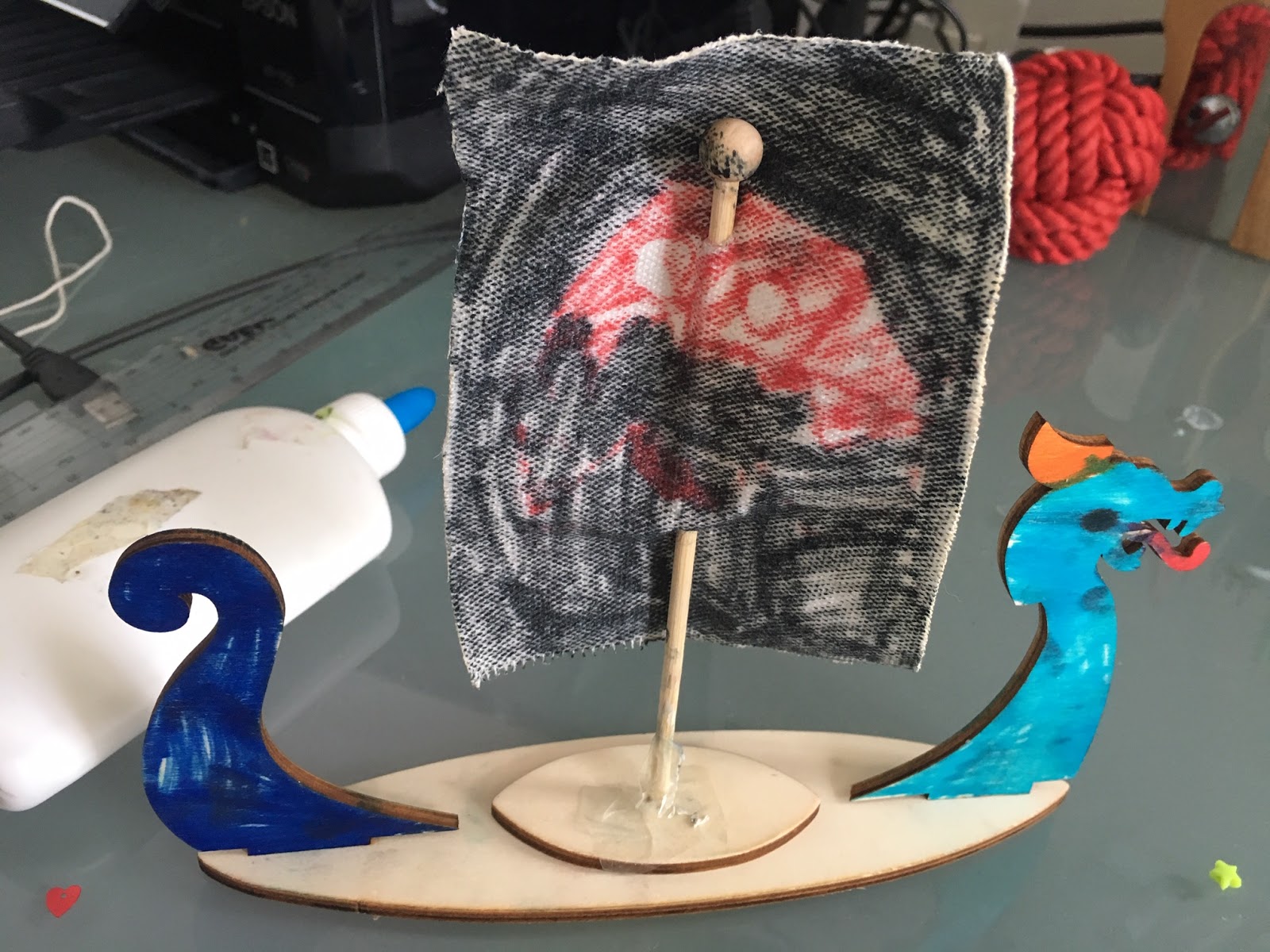
 The books also feature the Pirate training programme as well as the vikings and dragons, so we included that on the invitations, widening the scope for fancy dress as well as enabling us to reuse some decorations from a pirate party we'd held for our son's third birthday. For the invitations I drew a Seadragonus Giganticus Maximus from the books which we photocopied and stuck to folded card and we invited vikings, dragons and pirates to join us. Rather scarily our son had a huge list of invitees, which we limited rather meanly perhaps, but in the interests of our sanity, to 20.
 3. Dragon hunt